Watch Hands Explained: The Small Parts That Tell You Everything
Nobody walks into a showroom asking about hands. People ask about brands, movements, steel versus gold, and what holds value. But here's a test I like. Cover the dial of a Rolex Submariner with your palm and leave only the hands showing. Any collector will still name the watch in one second. That's how much identity lives in two thin pieces of metal, and once you learn to read them, you'll never look at a watch the same way again.
So today, a guide to watch hands. What the shapes are called, why they exist, and what they tell you about the watch they sit on. My promise is that by the end, you'll spot a dive watch, a dress watch, or a field watch from across the room, using nothing but the hands.
Why Hands Have Shapes at All
A watch hand has one job, and it's harder than it sounds. You need to know the time in half a second, in bad light, without thinking. That means the minute hand must look clearly different from the hour hand, both must stand out against the dial, and on sports watches they need room for lume, the glowing paint that works in the dark.
Every hand shape you'll ever see is some mix of three goals. Be easy to read. Be beautiful. Carry the brand's face. Tool watches lean on the first goal, dress watches on the second, and a few famous designs exist purely for the third. Keep those three goals in mind and every shape below will make sense.
The Simple Ones: Baton, Pencil, Obelisque, Syringe
Start with the plain workers. The baton is a straight stick, clean and flat, and it's everywhere because it works everywhere. The pencil is a baton with a pointed tip, like a sharpened pencil, which makes reading minutes a bit more exact. The obelisque tapers toward the tip like the stone monuments it's named after, so it adds a little drama without leaving the simple family.
The syringe is my favorite of this group. Picture a wide hand that narrows into a thin needle at the tip, like a medical syringe. Doctors' watches and old field watches used it because the fat body holds lume while the needle points at the exact minute. It's a smart design, and brands like Longines still use it on their military reissues today.
The Dress Watch Family: Leaf, Dauphine, Alpha, Breguet
Now the elegant side. The leaf hand, which the French call feuille, curves gently like a blade of grass. It's the classic choice for thin dress watches because it looks soft and calm. Nomos and many vintage pieces wear it well.
The dauphine is the king of dress hands. It's a long triangle with a sharp ridge running down the middle, so light hits each side differently and the hand flashes as your wrist moves. The 1950s and 60s belonged to this shape. Patek Philippe Calatravas, vintage Omegas, and countless Jaeger-LeCoultres carry dauphines, and when people say a watch looks "mid-century," this hand is usually why. The alpha is its close cousin, a thinner triangle on a narrow stem, and Omega loved it.
Then there's the Breguet hand, and this one comes with real history. Abraham-Louis Breguet designed it in the 1780s, a thin stem ending in a hollow circle with a small tip, often called a pomme or apple. It was radical back then because pocket watch hands were heavy and ornate, and his were light and clear. Almost 250 years later, Breguet still puts these hands on its watches, in blued steel, and plenty of other brands borrow them for anything meant to look classical.
The Ornate Old Guard: Spade, Fleur de Lys, Louis XV
Before wristwatches, pocket watches ruled, and pocket watch hands were jewelry. The spade hand ends in the card-suit spade shape, and you'll find it on trench watches and railroad pocket watches from a century ago. The fleur de lys carries the French royal lily on its stem. The Louis XV style goes further still, with curls and flourishes along the whole hand, like iron gate work.
You won't see these on many modern watches, but they matter, because when a brand today wants to say "we remember where this all started," it reaches for these shapes. Some Patek perpetual calendars and many restored pocket watches still rock them.
Built for Battle and Water: Sword, Cathedral, Arrow, Plongeur, Lollipop
Now the tough family. The sword hand is a straight blade with a pointed tip, and Cartier made it famous on the Tank, in blued steel, which is a funny twist because the Tank is a dress watch. Broader lumed swords also sit on dive watches like the Omega Seamaster, so this shape lives a double life.
The cathedral hand comes from World War I trench watches. It's divided into segments that look like a stained-glass church window, which is where the name comes from. The segments weren't decoration at first. They were frames holding blobs of glowing radium so soldiers could read the time at night. Hamilton's field watches still use cathedral hands, and they carry that story with them.
The arrow hand ends in a wide arrowhead full of lume, made to be seen underwater or at night, and the plongeur, French for diver, takes the same idea further with a huge minute hand you can't miss. Seiko's vintage divers made the plongeur famous, often in bright orange. The lollipop is a seconds hand with a lumed circle near the tip, and on a dive watch that circle matters more than you'd think, because a moving dot proves your watch is still running while you're twenty meters down.
Notice the pattern here. On every serious dive watch, the minute hand is the loud one. That's because divers count minutes of air, not hours, so the design puts all its weight where a life depends on it.
The Brand Signatures: Mercedes and Snowflake
Two hands are so famous they became brand logos in themselves.
The Mercedes hand sits on almost every Rolex sports watch, from the Submariner to the GMT-Master to the Explorer. The hour hand carries a circle split into three parts, which looks like the Mercedes car logo, hence the name. People love to argue about why it exists. The most likely truth is boring and practical, because the three sections frame the lume and keep the large glowing circle stable. Whatever the origin, Rolex has kept it for some seventy years, and today that little three-pointed circle is one of the most recognized shapes in all of watchmaking.
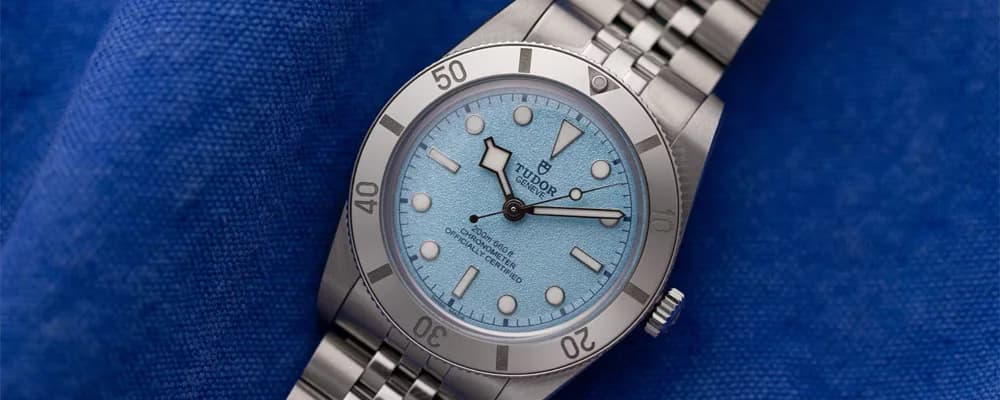
The snowflake belongs to Tudor. In 1969, Tudor gave its dive watches square-ish hands with a diamond shape on the hour hand, reportedly because professional divers, including the French navy, wanted more lume and clearer reading in murky water. Collectors nicknamed it the snowflake, and when Tudor relaunched itself with the Black Bay line, it built the whole comeback around that hand. One shape carried an entire brand back to life. If you ever doubt that hands matter, that's your answer.
What This Means When You're Buying
Here's the practical part, from my side of the counter. On a new watch, hands tell you what the watch is for. Thin dauphines or leaves say dress, big lumed arrows and swords say sport, and syringes or cathedrals say field. If a watch mixes those signals badly, something's off with the design, and you'll feel it even if you can't say why.
On a vintage watch, hands can make or break the deal. Hands get swapped during service, and wrong or refinished hands hurt value badly. The lume on the hands should age to the same color as the lume on the dial. When the dial is warm cream and the hands glow bright white, the hands are likely later replacements, and the price should reflect that. It's one of the first checks you should make on any vintage Rolex or Patek that comes through your collection.
Související články