The Lever on the Side of This Panerai Kept Men Alive
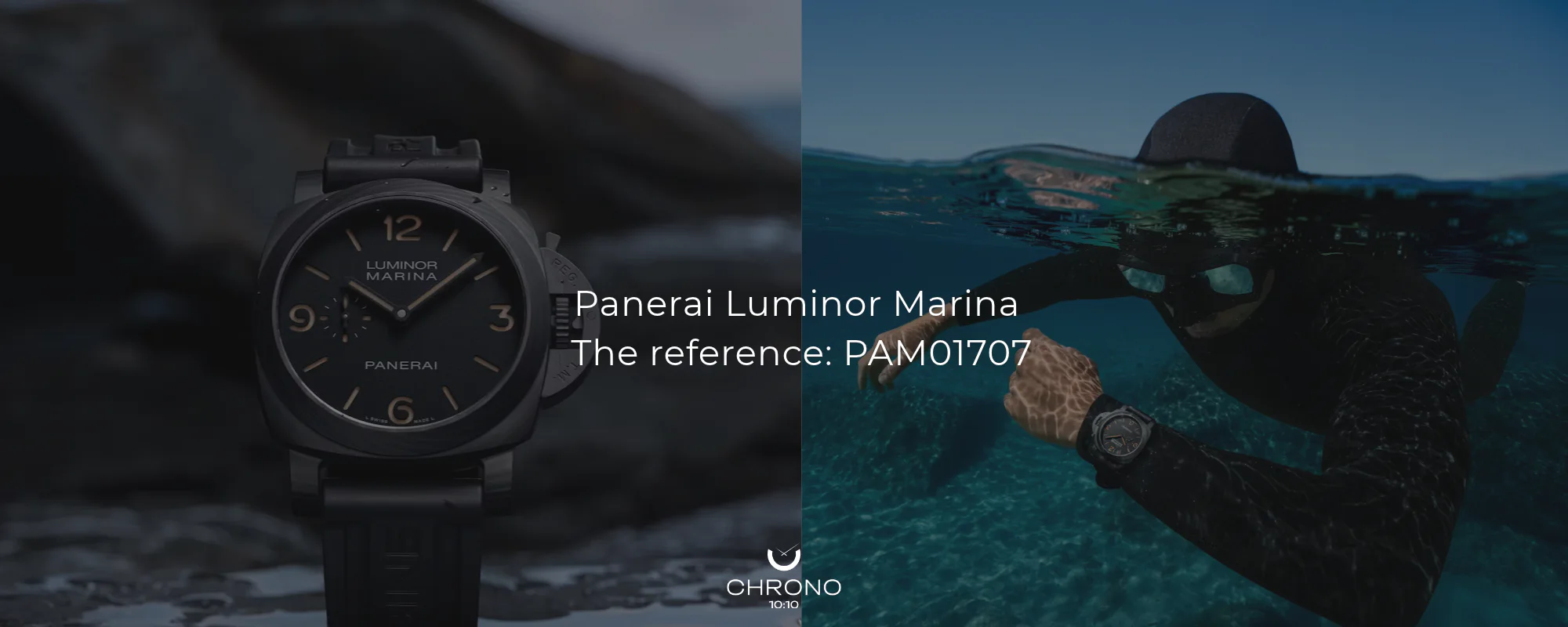
Panerai has put the Luminor Marina in a case made of compressed carbon fibre. It is 44mm wide, 14.5mm thick, waterproof to 300 metres, and the whole watch weighs about 100 grams. The reference is PAM01707. It costs 15,200 euro and there is no limited edition game attached to it.
The case material will get most of the attention. I want to talk about the lever instead, because it is the reason this brand exists and most people who own a Panerai have never been told the story.
Source: Hodinkee.com
The Crown Problem
Panerai started in Florence in 1860 as a watch shop. By the 1930s it was supplying instruments to the Royal Italian Navy, and its main customer became the Decima Flottiglia MAS, the frogman unit that rode manned torpedoes into enemy harbours and attached charges to the hulls of ships. Two men sat astride a machine they called the pig, in cold black water, for hours.
Those men needed to know how long they had been down and how long they had left. The watch on the wrist was mission equipment.
Source: Hodinkee.com
Here is the engineering problem. A normal dive watch keeps water out with a screw-down crown, which means threads. Threads wear. Grit gets into them. A man in thick gloves, in the dark, cannot feel whether he has tightened the crown fully or left it a quarter turn short. If it backs off slightly, the case floods and the watch dies, which in that job could mean the man dies as well.
Panerai's answer was to stop using threads for the seal. They built a bridge over the crown with a cam lever on it. You push the crown in, swing the lever down, and the cam presses the crown hard against the gasket and holds it there under mechanical pressure. There is nothing to strip and nothing to feel your way around. The lever is either closed or it is open, and you can tell which with a gloved hand by touch.
It was patented in the 1950s. It is still doing the same job on this watch, which is rated to 300 metres, and it is the single most recognisable thing Panerai owns.
Why the Watch Is So Big
The original navy pieces were 47mm. That was a deliberate specification. A diver in murky water, wearing a rubber hood, glancing at his wrist for half a second, needed numbers he could read without thinking.
The dial construction came from the same requirement. It is what the trade calls a sandwich dial, and it works like this. Two metal discs sit on top of each other. The lower disc is coated in luminous material. The upper disc has the numerals and markers cut clean through it. So the glowing parts are wells of lume you look down into, and the light comes from underneath the dial surface. It glows harder than paint and it cannot be rubbed off, because there is nothing sitting on the surface to rub.
That is still how this watch is built. It is the reason 44mm survives on a modern Panerai when most brands have shrunk everything.
Source: Hodinkee.com
The Lume Is Pretending
Now the part collectors argue about.
The markers on this dial are beige. Real Panerai dials from the 1950s and 60s used tritium, which glowed for a few years and then slowly turned cream, then tan, then brown, over decades. Collectors love that colour and pay a great deal for it. Panerai has coloured fresh Super-LumiNova to imitate the result.
I go back and forth on faux patina in general. Most of the time it bothers me, because it sells you a history the watch did not live through, and buyers who care about that history can tell.
On a Panerai it bothers me less, for a specific reason. Panerai did not sell watches to the public until 1993. Every Luminor made since then is a reproduction of something that was only ever issued to military divers, and there is no original version you could have bought at the time. The whole modern brand is a costume. Beige lume is at least honest about which costume it is wearing.
One practical note. Super-LumiNova holds its colour. A genuine tritium dial from 1965 kept changing for sixty years, and part of what collectors pay for is that no two ended up the same. This dial will look identical in 2056. You are buying the finished picture. The process already happened to somebody else's watch.
The Rest of It
The case and bezel are Carbotech, which Panerai makes by pressing sheets of carbon fibre together with PEEK, a tough industrial polymer. Each sheet is laid at a different angle, so when the case is cut the layers show as a marbled pattern on the matte black surface. Every case comes out looking slightly different. Panerai says the material is 64 percent lighter than titanium and 80 percent lighter than steel.
Inside is the P.9010, made at Richemont's ValFleurier, 200 parts, 31 jewels, 4Hz, twin barrels wired in series for three days of running. It is 6mm thick.
Source: Hodinkee.com
The feature worth knowing about is that the hour hand adjusts on its own, forward or back, in one hour steps, without stopping the seconds. That is a travel function. Land in another country, click the hour hand across, and your minutes and seconds stay exactly where they were. Plenty of watches costing more do not offer it.
There is no date window, and the dial is better for it. The caseback is closed titanium with a black DLC coating, so the movement stays hidden. It comes on brown calf leather with beige stitching, and a black rubber strap is in the box.
Who Should Buy It
The size decides this one. Carbotech fixes the weight and does nothing about the width. At 44mm across with the bridge sticking out of the right side, this watch covers a wrist and announces itself from across a room. Try it on before you form a view from photographs, because the 100 grams changes how the size feels more than the numbers suggest.
If it fits you, the combination here is a good one. Three hundred metres, three days of power, a travel hour hand, a dial you can read in a dark pool, and a case that shrugs off salt water. That is a watch you can wear every day for twenty years.
One honest word about money. Panerai has been soft on the second-hand market for a long time, and a carbon composite case is a material most buyers still treat with suspicion when reselling. Buy this because you want to wear it. Anyone telling you it will hold its value is guessing, and the guess has historically gone the wrong way.
Související články