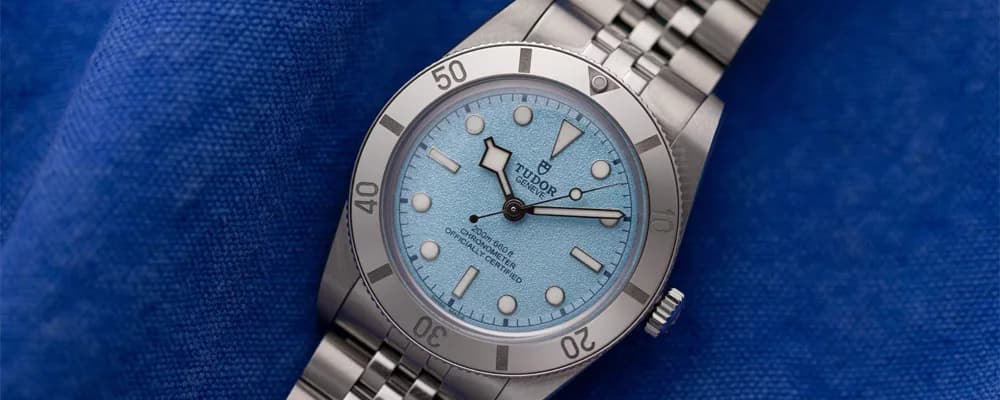
A Reasonable Forecast For The Watch Market In 2026
The watch market loves drama. Prices go up, people lose their minds, someone posts a wrist shot of a steel sports watch and suddenly half the collectors believe they missed the financial opportunity of the century.
Then reality arrives.
That is more or less what happened between 2022 and 2025, and if you step back for a second and look at the market from a European perspective, the situation entering 2026 feels surprisingly healthy. We have way less speculation. More collectors buying watches because they love them, which sounds obvious but apparently needed a reminder.
From where we sit at Chrono 10:10 in Prague, right in the middle of Europe, the mood has shifted in a way that feels familiar. I’d call it calm. Thoughtful. Slightly sceptical of hype. Which, frankly, is exactly how the European watch scene has always worked.
And after a few chaotic years globally, the market seems to be drifting back toward that mindset.
2025 Was A Weird Year For Watches
Let’s not sugarcoat it. Retail slowed down in many places during 2025, and the global market felt a little…slow?
Demand bounced around depending on the region. The United States cooled after the madness of the previous years. Asia, particularly Hong Kong and mainland China, moved through periods of uncertainty that made the market unpredictable for both retailers and collectors. Even the secondary market, which had gone pretty wild during the pandemic years, finally started settling into something that resembled normal pricing again.
For some people, this looked like bad news.
For anyone who loves watches for the right reasons, it looked like the market finally becoming somewhat reasonable.
Because the truth is simple. When a steel sports watch starts behaving like a cryptocurrency, something in the ecosystem has gone off track.
By the end of 2025, prices had largely stabilised, with speculation mostly gone, and collectors began paying attention to the watches themselves again instead of staring at auction graphs.
In other words, things started making sense again.
Europe Holds The Line
While some regions bounced between good and not-so-good, Europe remained what it has always been in the watch world: steady ground.
Cities like Prague, Vienna, Zurich, and Geneva still attract collectors who care about history, mechanics, and solid craftsmanship. The typical European buyer rarely goes after hype in the same way markets sometimes do elsewhere. Instead, they take their time, ask questions, and often know exactly why they want a particular reference before they walk into a boutique.
It is a slower rhythm, but it builds trust.
This environment benefits dealers who focus on long-term relationships. Buyers from the United States, Asia, and the Middle East frequently look toward Europe when they want a reliable place to buy or sell a serious watch, partly because the region operates under strict regulations and partly because the watchmaking culture here has some history.
Prague sits right in the middle of this ecosystem, and shops like Chrono 10:10 have grown alongside it by doing something quite radical in today’s world: staying consistent.
No sudden pivots every time the internet falls in love with a new model.
Just watches, collectors, and a lot of conversations about movements, finishing, and the little details people notice once they spend enough time around mechanical watches.
Europe Between America And Asia
The global watch market often behaves like a tug of war between the United States and Asia, with demand shifting back and forth depending on economic cycles, currency changes, and government policies.
Europe sits somewhere in the middle of that dynamic, and in many ways, that position has become an advantage.
Recent tariff reductions in the United States, which dropped from roughly thirty nine percent to around fifteen percent, have helped ease pressure on European exporters. American collectors have also started re-entering the market more actively after a slower period.
Meanwhile, parts of Asia continue navigating economic fluctuations, which means many international buyers look toward European dealers when they want stability in pricing and authenticity.
For collectors who like certainty, Europe has always represented something important: if you buy a watch here, you know exactly what you are getting.
That reputation does not happen overnight. It builds slowly through years of trust and a lot of flawless deals.
Collectors Are Changing Again
One of the most interesting shifts in the last year has been psychological rather than financial.
During the peak of the market bubble a few years ago, some buyers treated watches almost like lottery tickets. The goal was simple. Buy the right reference. Wait six months. Sell it for a profit.
That approach works for a while, but it rarely lasts.
With stabilized prices and the end of speculation, collectors remembered why they even love watches: mechanics, design, and a brand's generational story.
European buyers never abandoned those ideas completely, which might explain why the region feels comfortable during this transition.
At Chrono 10:10, the philosophy has always been straightforward. A watch should bring joy for decades, not just until the next market craziness. Helping someone choose a piece they will enjoy wearing every day is far more satisfying than chasing whatever the internet calls the hottest model of the month.
There is also a practical side to this mindset. A proper service center keeps these watches running for generations, which matters when the object on your wrist is designed to outlive you.
The Brands Collectors Still Trust
When the market becomes calmer, attention naturally shifts toward brands whose reputations rest on long term craftsmanship rather than short term hype.
Few names illustrate this better than Patek Philippe.
European collectors have admired the brand for generations, partly because of its technical achievements and partly because it remains family owned in an industry dominated by large luxury groups. It may sound cliche to many people, but buying a Patek is actually like buying a piece of the watchmaking history (mainly since most of the historical and truly classical models come from them)
Watches like the Nautilus 5712 still remind us of the legendary 5711, while pieces such as the Aquanaut 5168G show how a sporty design can still be elegant when done properly in white gold.
Source: wristaficionado.com
Then there is the Calatrava line, particularly the 5226G, which proves that a simple three hand watch can hold its own in a world full of complications.
Source: wristaficionado.com
Rumours for 2026 suggest updates in collections like Gondolo and perhaps new minute repeater releases, which would not surprise anyone who follows the brand closely.
Another name that resonates strongly across Europe is A. Lange & Söhne.
Collectors often describe it as Germany’s answer to Patek Philippe, though the brand has its own character shaped by Saxon engineering and very German finishing standards.
The Lange 1 remains one of the most recognisable dial layouts in modern watchmaking, and pieces like the Datograph Up Down have earned legendary status with chronograph enthusiasts.
The Odysseus, the brand’s relatively new sports model, continues attracting attention as Lange experiments with materials and case designs that could expand the collection.
Then there is Jaeger-LeCoultre, often called the watchmaker’s watchmaker because of the sheer number of movements it has produced historically for other prestigious brands (like Patek Philippe).
The Reverso still stands as one of the most elegant designs ever created, originally built for polo players but now just as comfortable under the cuff of a tailored jacket. Meanwhile the Master Ultra Thin Moon demonstrates how refined a classic dress watch can look when the proportions are handled well.
Collectors who lean toward more technical heritage are often pulled toward Breguet, a brand tied directly to Abraham Louis Breguet, probably the most influential figure in watchmaking history.
The Tradition line exposes the architecture of the movement on the dial side, giving wearers a front row seat to the mechanics. Pieces like the Classique Tourbillon Extra Plat remain among the most elegant expressions of high horology available today.
And finally there is Vacheron Constantin, which proudly holds the title of the oldest watch manufacture in continuous operation since 1755.
The Overseas collection has become a modern favourite thanks to its combination of sporty design, high-level finishing, and some of the most beautiful colours of blue used on a watch dial, while pieces like the Historiques American 1921 remind collectors that Vacheron’s creativity goes well beyond conventional case shapes.
Why This Matters In Prague
Prague has slowly developed into an important stop for collectors travelling through Europe, partly because of its history and partly because the city sits at a crossroads between Western and Eastern markets.
Boutiques like Chrono 10:10 operate in this environment by focusing on authenticity, careful sourcing, and long-term service support. When a client purchases a watch here, they are entering a relationship with people who understand the mechanics and history behind the object.
These ways obviously attract collectors who prefer trust over hype, which tends to be a refreshing experience after scrolling through endless online listings.
Balance, Finally
If the last few years taught the watch world anything, it is that extreme hype does not last forever.
The market entering 2026 is way calmer, more thoughtful, and perhaps slightly wiser than it was during the Wild West era of the early decade.
Collectors are asking better questions. Dealers who built their reputations on trust rather than speculation finally look like the sensible ones in the room.
For Europe, this shift is less like a revolution and more like a return to normal.
Související články