The Watch That Saved TAG Heuer Is Now a Goodbye Present
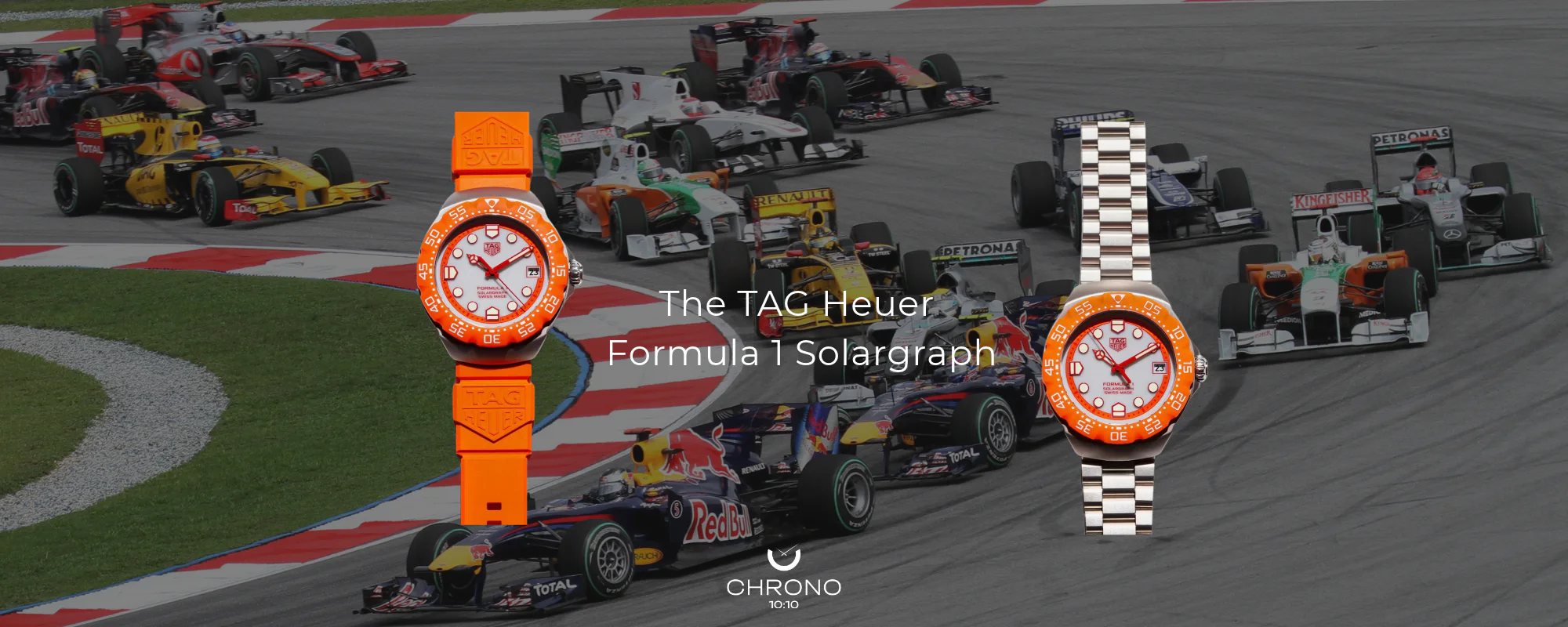
TAG Heuer has made two limited editions of the Formula 1 Solargraph for the final Dutch Grand Prix at Zandvoort. Both are 38mm sandblasted steel, 9.9mm thick, waterproof to 100 metres, with a bright orange bezel and a grey opaline dial. One comes on orange rubber, 1,500 pieces, 2,150 dollars. The other comes on a steel bracelet, 1,000 pieces, sold online only, 2,250 dollars.
Source: Hodinkee.com
Race-tied limited editions arrive constantly and most of them are forgettable. This one has two things going for it. The race it commemorates will never happen again, and the watch it is built on is the reason TAG Heuer still exists.
The Cheap Plastic Watch That Rescued the Company
In the early 1980s the Swiss watch industry was dying. Cheap accurate quartz watches from Japan had taken the bottom of the market and then most of the middle, and Swiss firms went under in numbers that are hard to imagine now. Heuer, a company with a serious racing history going back to the 1910s, ran out of money and was sold to the TAG Group in 1985.
The first watch released under the new TAG Heuer name came out in 1986. It was called the Formula 1. It had a fibreglass case, loud colours, and a quartz movement, and it cost very little. Watch snobs of the day found it embarrassing.
Source: Hodinkee.com
It sold in the millions. That money kept the lights on and paid for everything TAG Heuer did afterwards, including the mechanical chronographs that people now treat as the serious part of the catalogue. The Formula 1 is the reason there was a company left to make them.
TAG Heuer brought the model back last year at 38mm, in the original colours and shapes, and it became the most talked about thing the brand released in 2025. These Zandvoort editions sit on top of that revival.
Why Zandvoort Matters
Zandvoort is a circuit built into sand dunes on the Dutch coast, and it left the Formula 1 calendar in 1985. It came back in 2021 after a 36 year gap, which nobody expected to work. The town is small, the paddock space is tight, and the roads in are narrow. The organisers told people to arrive by train and by bicycle from Amsterdam, and it worked.
What followed was the loudest home crowd in the sport. Around 305,000 people came each weekend, most of them dressed in orange, most of them there for Max Verstappen, who won the first three races held there. Orange smoke over the dunes became one of the images of modern Formula 1.
The track itself is unusual. Modern circuits are flat and wide because that is what safety rules push you towards. Zandvoort has two banked corners, Hugenholtz and the final turn named after Arie Luyendyk, banked at around 18 degrees. Cars climb sideways through them. There is almost nothing else like it in Formula 1.
The promoter decided against renewing, so the race leaves the calendar after the weekend of 21 to 23 August, which is also the first sprint weekend the circuit has held. That is the whole reason this watch exists.
The Solar Part Is the Interesting Bit
The movement is TAG Heuer's TH50-00, which the brand calls Solargraph. It is quartz, and it charges from light.
Here is what that means in practice. The dial passes light through to a cell underneath it. Daylight through a window charges it. Office lighting charges it, slower. From a full charge the watch runs for about ten months in complete darkness, which means you would have to leave it in a closed drawer for the better part of a year to stop it.
You never change a battery. That sounds small until you count the cost over twenty years, and it also removes the moment when a watchmaker opens your case with a knife and scratches something.
Source: Hodinkee.com
Solar quartz has been around for decades and Citizen built a whole business on it. Most Swiss brands have kept away, partly because quartz still carries a stigma in Switzerland from the crisis that nearly killed the place. Putting it in the Formula 1 is a neat piece of history. The watch that survived the quartz crisis now runs on the technology that caused it, improved to the point where it needs no maintenance at all.
What You Get
The case is sandblasted steel, 38mm across with a 45.2mm lug span, so it wears smaller than the old Formula 1 models and fits a normal wrist properly. The bezel is bidirectional and made from TH-Polylight in bright orange, which is a composite instead of aluminium or ceramic.
The dial is grey opaline with an orange chapter ring, red markings on that ring, and red hands and index surrounds. The colour moves from orange at the outside to red as you go in. It sounds like a lot and the photographs suggest it holds together.
Source: Hodinkee.com
Water resistance is 100 metres. Reference numbers are WBY111H.FT8128 for the rubber and WBY111L.BA0042 for the bracelet. Both come in dedicated packaging. Presale opened on 18 August.
My Take
At 2,150 dollars this is an easy watch to like and a hard one to argue with. You get a proper steel case, a bezel that will not fade, a movement that needs nothing from you, and a design with a real story behind it.
Two honest warnings. Race limited editions almost never appreciate, and 1,500 pieces is a large number, so buy it because you want to wear it. And orange is orange. Look at it in daylight before you commit, because a colour that looks great on a grandstand full of Dutch fans behaves differently under office lighting five days a week.
If the orange is too much, the standard Formula 1 Solargraph gives you the same case and the same movement in calmer colours for less money, and nobody has capped how many they will make.
Source: Hodinkee.com
For anyone who stood in those dunes over the past five years, none of that matters and it should not. The race is finished, the crowd is going elsewhere, and this is the souvenir. That is a fair reason to buy a watch.
Related Articles