How Louis Vuitton Stopped Being a Fashion Watch Brand
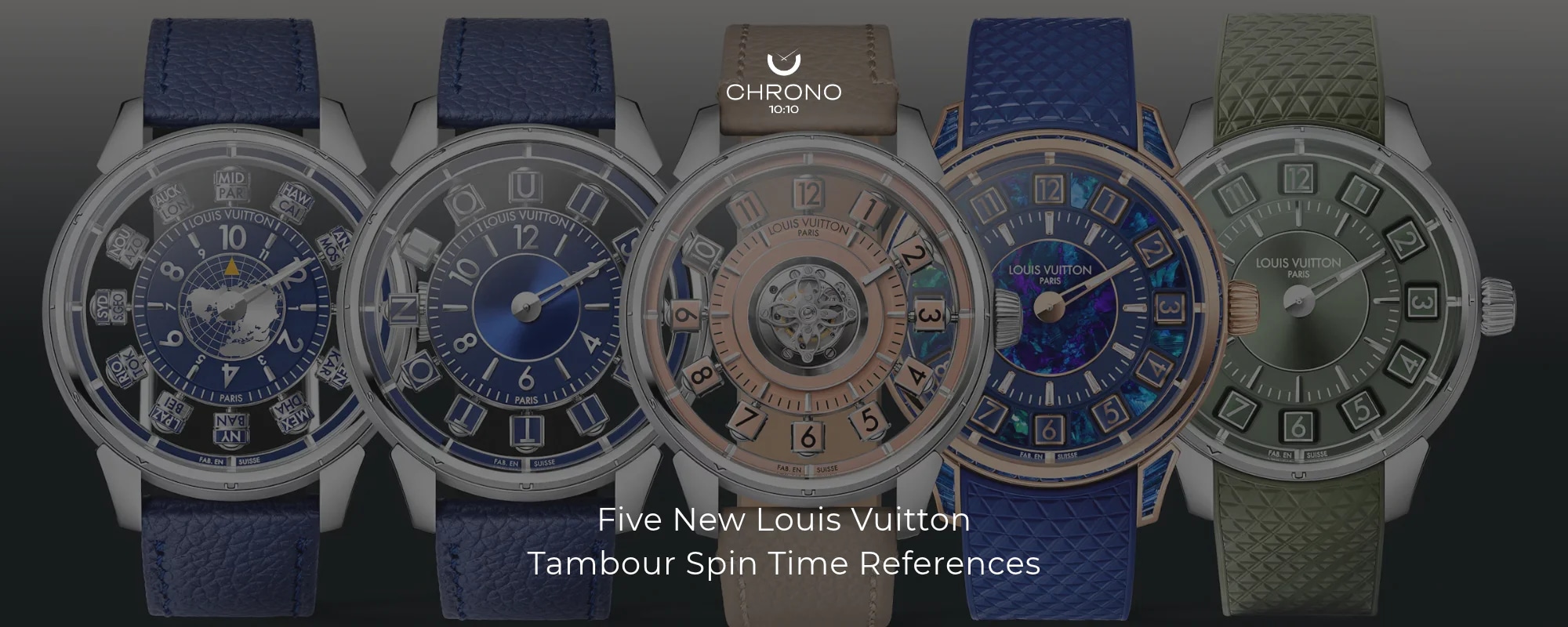
Louis Vuitton has moved five Tambour Spin Time references into its permanent collection, all in precious metal, priced from 85,500 to 199,000 dollars. New colours on an existing idea, which would be a footnote at most brands.
It is worth more attention here because of what Louis Vuitton had to do to get to the point where a 199,000 dollar tourbillon from a luggage company is taken seriously by people who know watches.
Source: hodinkee.com
Buying the Watchmakers
Louis Vuitton launched the Tambour in 2002 and spent the following decade being dismissed by the watch world, fairly. The early watches were fashion products with bought-in movements, sold on the strength of the name, and nobody in Geneva lost sleep over them.
The change began in 2011, when Louis Vuitton bought a small Geneva workshop called La Fabrique du Temps. The two men who ran it, Michel Navas and Enrico Barbasini, had careers behind them at Patek Philippe, Audemars Piguet and Franck Muller, and had spent years building complicated movements that appeared in other companies' watches without their names attached. Louis Vuitton also bought Léman Cadrans, a dial manufacturer in Meyrin, and then built a facility outside Geneva to house all of it.
That is the part of the story people miss. Rather than hiring consultants to style a watch, Louis Vuitton bought two of the better movement constructors in Switzerland outright and gave them a building.
The results followed. In 2021 the Tambour Carpe Diem took the Audacity Prize at the Grand Prix d'Horlogerie de Genève, which is the industry judging its own and is close to impossible to win with marketing. Louis Vuitton has also produced watches carrying the Poinçon de Genève, the Geneva Seal, which sets standards for finishing and construction that most Swiss brands never attempt.
Source: hodinkee.com
The Decision Behind It
Credibility took a second step in 2023, when Jean Arnault took over the watch division and rebooted the Tambour as a steel watch on an integrated bracelet at around twenty thousand dollars.
The interesting part was what disappeared. Louis Vuitton stopped making the cheap quartz Tambours that had been the volume business for twenty years. A company with the strongest luxury brand on earth walked away from selling watches to people who wanted the logo, and kept only the ones it could defend on movement and finishing.
Brands talk about repositioning constantly. Very few give up revenue to do it.
Source: hodinkee.com
What Spin Time Is Doing
Spin Time arrived in 2009 and has stayed strange ever since. There is no hour hand. Instead, twelve small cubes sit around the dial where the hour markers would be, each mounted on its own axis, and each able to rotate.
Eleven of them show one colour. The twelfth, the current hour, has flipped to show a contrasting face. At the top of every hour, that cube spins back to match its neighbours while the next one flips over, and the two movements happen together, instantly.
The mechanical problem is energy. Moving an hour hand costs a watch almost nothing, because the hand is light and the movement is gradual. Flipping a cube means accelerating a solid block of metal from rest, stopping it precisely on a new face, and doing it twice at the same moment, all powered by the same mainspring that runs everything else. The jump has to be clean and instant, since a cube caught halfway between faces reads as a broken watch, where a hand a fraction off its marker reads as nothing at all. Each cube also needs its own drive and its own jumper spring, so the movement carries twelve of everything.
Louis Vuitton has since built the complication with a suspended movement, so the cubes appear to float with nothing beneath them, and with a flying tourbillon in the middle whose cage is shaped like the brand's Monogram flower.
The Clever One
The Antipode deserves its own paragraph, because the thinking behind it is smarter than the watch usually gets credit for.
It is a world time watch, and instead of listing twenty-four cities around the dial, the cubes carry pairs. Each pair is antipodal, meaning the two cities sit on exactly opposite sides of the planet and their times are twelve hours apart. One cube can therefore serve both cities at once, since when it is nine in the morning in one it is nine in the evening in the other. The city printed in blue is the one in the afternoon, the city in silver is the one in the morning, and the cube rotates when they swap. A world map disc in the centre with a yellow pointer tracks your local position.
It also breaks completely when daylight saving arrives, which nobody at Louis Vuitton can do much about.
The Five
Two are 39.5mm and 12.15mm thick, water resistant to 100 metres, with sapphire casebacks over the ST13.01. The white gold Spin Time Green has a khaki sunray dial with green cubes and silver numerals at 85,500 dollars. The other is rose gold with an Australian opal dial, baguette diamond markers and baguette sapphires set into the bezel and lugs, at 189,000.
Three are 42.5mm and 12.45mm, at 50 metres. The Spin Time Air Blue in white gold suspends the movement for the floating effect, 94,500 dollars. The Antipode runs the ST12.01 with a blue dial standing in for ocean, 119,000. The Flying Tourbillon in platinum with a salmon dial and the ST05.01 is 199,000.
Source: hodinkee.com
Where I Would Push Back
The branding is heavy. On the Spin Time Air the name appears three times on the front of the watch, including printed across the cubes themselves, and there is something odd about a company this confident in its watchmaking still shouting its name at you from three directions. The only version without a signed bezel is the opal, where the signature has been replaced by sapphires and the price by 189,000 dollars.
The money is the other thing to be clear-eyed about. Eighty-five thousand dollars buys a white gold watch with a jumping hour display and a 45-hour movement, and there are several independents who would sell you more watchmaking for less. Louis Vuitton watches have also been weak on the second-hand market, which is what happens when a brand spends two decades selling fashion watches and then changes its mind.
What has changed is that the argument is now about price and taste instead of legitimacy. Fifteen years ago the joke was that Louis Vuitton made watches. Nobody in the trade makes that joke anymore, because the workshop in Meyrin has become one of the more capable places in Geneva, and the watches coming out of it are the reason.
Verwandte Artikel